
iLORA technology · Research concept
A shared room.
More ways to take part.
A proposed shared-living experience where older adults can enjoy television, conversation, and everyday activities, with optional accessible assistance chosen by the individual.
Research conceptHow this serves the mission
A shared room. More ways to take part.
A carefully evaluated description could help a person follow a shared activity, ask a question, or decide when they want help, while preserving their own choices.

The problem
Why this matters.
A television scene, a change in a shared room, or a conversation across the seating area can leave someone without the same visual information as other participants.
Who is affected
People at the center.
Older adults, blind and low-vision people, residents of shared living settings, family members, and caregivers.
The proposed response
Explore a portable speaker interface for user-requested descriptions and accessible participation.
A carefully evaluated description could help a person follow a shared activity, ask a question, or decide when they want help, while preserving their own choices.
A lounge with different ways to participate
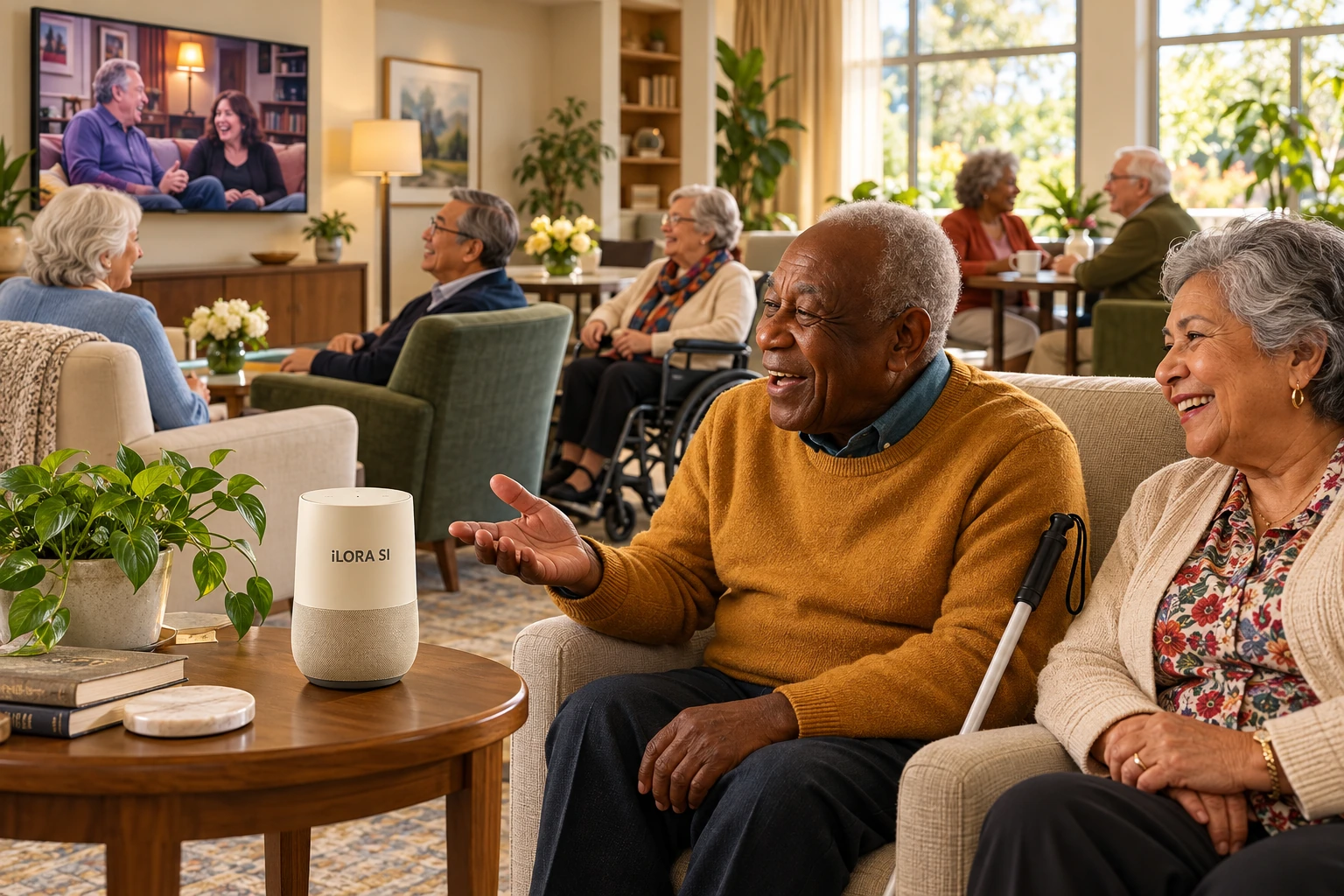
The illustration shows residents watching television, sitting together, and conversing in separate areas. It represents a proposed environment, not an operating iLORA care facility. Support should fit the person’s activity and preferences.
Ask about a television scene
A proposed interaction might begin: “iLORA, describe what is happening on the television.” Useful narration would need appropriate access to the content, accurate timing, clear speech, captions or text alternatives, and a way to stop or repeat it. No live television interpretation is operating here.
Ask about the room
Someone might ask how many people are visible, where seating is located, or what is happening nearby. Any future answer would need to explain uncertainty and limits of view. An estimated count or seat description must not be treated as reliable identification, surveillance, or safe-navigation guidance.
Permission in a shared space
Residents and visitors would need understandable notice and appropriate permission before cameras or microphones are used. Private listening, accessible physical controls, an obvious off state, and alternatives without a camera are design questions.
Comfort and dignity before deployment
People with lived experience and care professionals would help evaluate understandable descriptions, comfort, background noise, and control. Clinical care, emergency coverage, staffing, and professional authorization remain separate from an ordinary speaker interaction.
What a person could ask
Support begins with their question.
Illustrative requests only. No microphone, camera, or assistant is active on this page.
Television
“Describe what is happening on the television.”
A proposed narration could explain visible action in context, with understandable limits and controls to pause or repeat.
The shared room
“How many people can you see, and where are they sitting?”
A proposed response would state uncertainty and the limits of the camera view. It would not establish identity or a complete headcount.
An everyday detail
“Read this information to me.”
A future interaction could describe selected text or an object when appropriate permission and usable input are available.
Available today
What this page offers.
This page offers a concept illustration and a public explanation. No working device, care service, monitoring, tracking, or emergency response is available through this prototype.
Development status
Research conceptThe described capability or program remains at the stage shown here. Images are illustrative, and no availability or performance is established by a rendering.
Prepare a technology inquiry →